
Why eligibility is about real care needs — not labels, diagnoses or templates
Following our previous article on why it’s vital to only share your medical information with registered clinical professionals, we want to address one of the most common questions pensioners ask:
“Do my health conditions actually qualify for Attendance Allowance?”
Every year, thousands of older people miss out on vital financial support simply because they assume they’re not eligible.
The reality is very different.
What Is Attendance Allowance (AA)?
Attendance Allowance is a non-means-tested benefit for people who have reached State Pension age and need extra support due to illness or disability.
It is paid at two weekly rates:
- £73.90 per week (lower rate)
- £110.40 per week (higher rate)
Importantly:
- it does not affect your State Pension
- it is tax-free
- it may increase entitlement to other benefits such as Pension Credit or Housing Benefit
For many pensioners, Attendance Allowance can be worth over £5,700 per year.
Read our full Attendance Allowance guide
Scotland: Pension Age Disability Payment (PADP)
In Scotland, Attendance Allowance is being replaced by a new benefit called Pension Age Disability Payment (PADP), administered by Social Security Scotland.
PADP is currently being rolled out across Scotland and introduces:
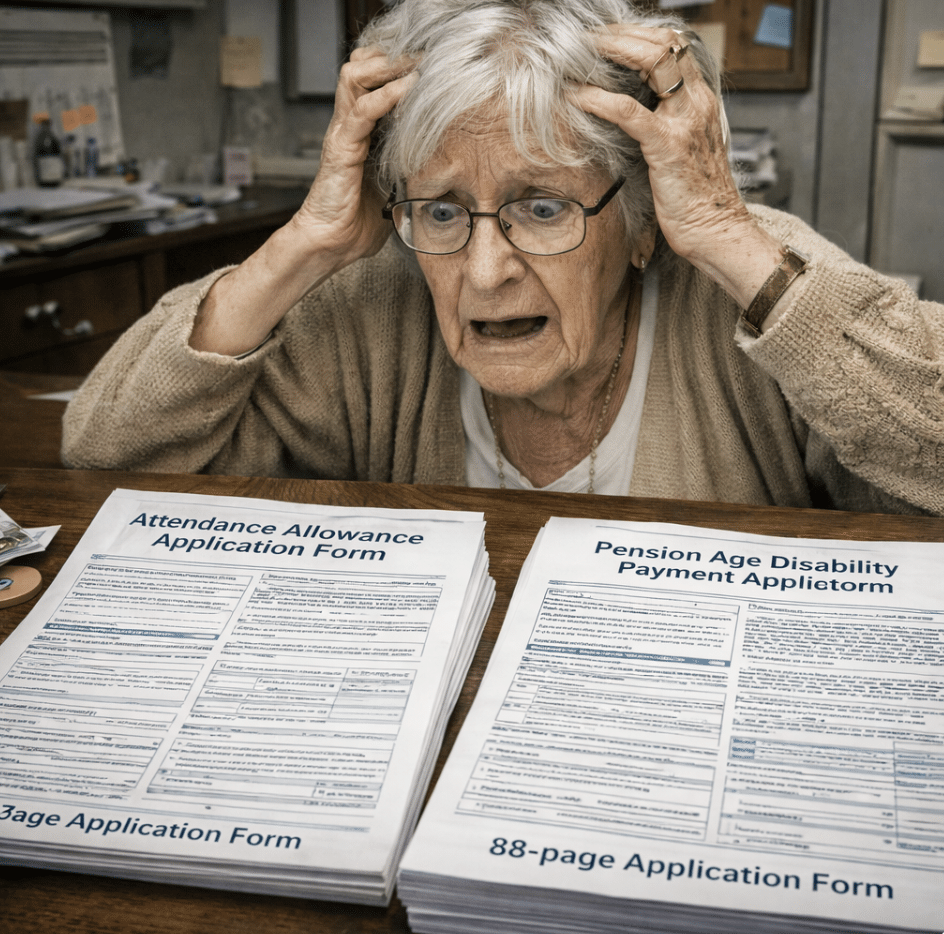
- an 88-page application form
- more detailed medical and functional questions
- expanded evidence requirements
- increased focus on safety, supervision and daily living risks
While PADP is currently limited to Scotland, it is being closely monitored as part of the UK’s wider benefits reform programme, with plans being discussed to introduce a similar model across the rest of the UK in the future.
This makes accurate, clinically informed applications more important than ever.
Pension Age Disability Payment application support
There Is No Official List of Qualifying Conditions
Despite the length and complexity of both AA and PADP forms, there is no official list of eligible medical conditions.
Awards are not based on diagnosis alone.
Instead, decision-makers consider:
- how your condition affects everyday life
- what assistance you reasonably need
- whether supervision is required for safety
- how often support is needed during the day or night
Two people with the same diagnosis may receive very different outcomes depending on how their condition impacts them individually.
See the full DWP list of 57 qualifying conditions with statistics
Common Conditions Where People Often Qualify
Eligibility depends on impact, not labels — but the following conditions frequently support successful claims when daily living is affected.
Learn what stops people getting Attendance Allowance in the first place
Cognitive & Mental Health Conditions
- Dementia (including Alzheimer’s disease)
- Parkinson’s disease
- Stroke after-effects
- Memory impairment
- Brain injury
- Depression or anxiety affecting daily functioning
- Learning disabilities
Read our dedicated guide on Attendance Allowance for dementia
Musculoskeletal & Mobility Conditions
- Osteoarthritis or rheumatoid arthritis
- Osteoporosis
- Chronic joint or back pain
- Hip or knee replacements
- Fibromyalgia
- Severe sciatica
- Balance problems or frequent falls
- Use of walking aids
Cardiovascular & Respiratory Conditions
- Heart disease or heart failure
- Angina
- COPD (Chronic Obstructive Pulmonary Disease)
- Emphysema
- Severe or poorly controlled asthma
Neurological & Sensory Conditions
- Multiple sclerosis (MS)
- Parkinson’s disease
- Epilepsy
- Motor neurone disease (MND)
- Peripheral neuropathy
- Severe sight loss
- Hearing loss causing communication difficulties
Other Common Qualifying Conditions
- Cancer and treatment side effects
- Diabetes with complications
- Incontinence or bladder conditions
- Chronic fatigue syndrome / ME
- End-of-life care needs
- Recovery following surgery
If your condition is not listed above, you may still qualify.
You Don’t Need a Diagnosis — You Need Support
Many pensioners assume:
- “I’m not disabled enough.”
- “I don’t have a carer.”
- “Others are worse than me.”
But neither Attendance Allowance nor PADP require:
- a live-in carer
- someone already providing help
- a formal diagnosis alone
Support needs may include:
- washing, bathing or dressing
- managing medication safely
- preparing meals
- avoiding falls
- memory support
- supervision for safety
Even if you manage alone, needing help still counts.
A Real-World Example
Catherine, aged 82, lives alone.
She has arthritis, reduced grip strength and declining vision. She struggles with buttons, bathing safely and taking medication correctly.
Catherine does not have a formal carer.
After assessment, she was awarded £110.40 per week, helping her fund additional support and remain safe at home.
Why Accuracy Matters More Than Ever
Attendance Allowance forms are typically 32 pages long.
The Scottish PADP application extends this to 88 pages.
Many applications fail because:
- care needs are understated
- risks are not explained clearly
- medical impact lacks professional context
- answers rely on generic wording
Inaccurate or templated responses can lead to refusal — or place claimants at risk of signing information that does not fully reflect their real circumstances.
How to apply for Attendance Allowance
What evidence to include in your application
The Attendance Allowance Services Ltd Approach
Attendance Allowance Services Ltd is not a claims factory or template-based form filler.
We are a clinically led service, combining professional healthcare expertise with specialist administration.
Our values include:
- accuracy over exaggeration
- protection of sensitive medical data
- individual assessment — never boiler-plate wording
- clinical judgement supported by evidence
- full transparency before anything is signed
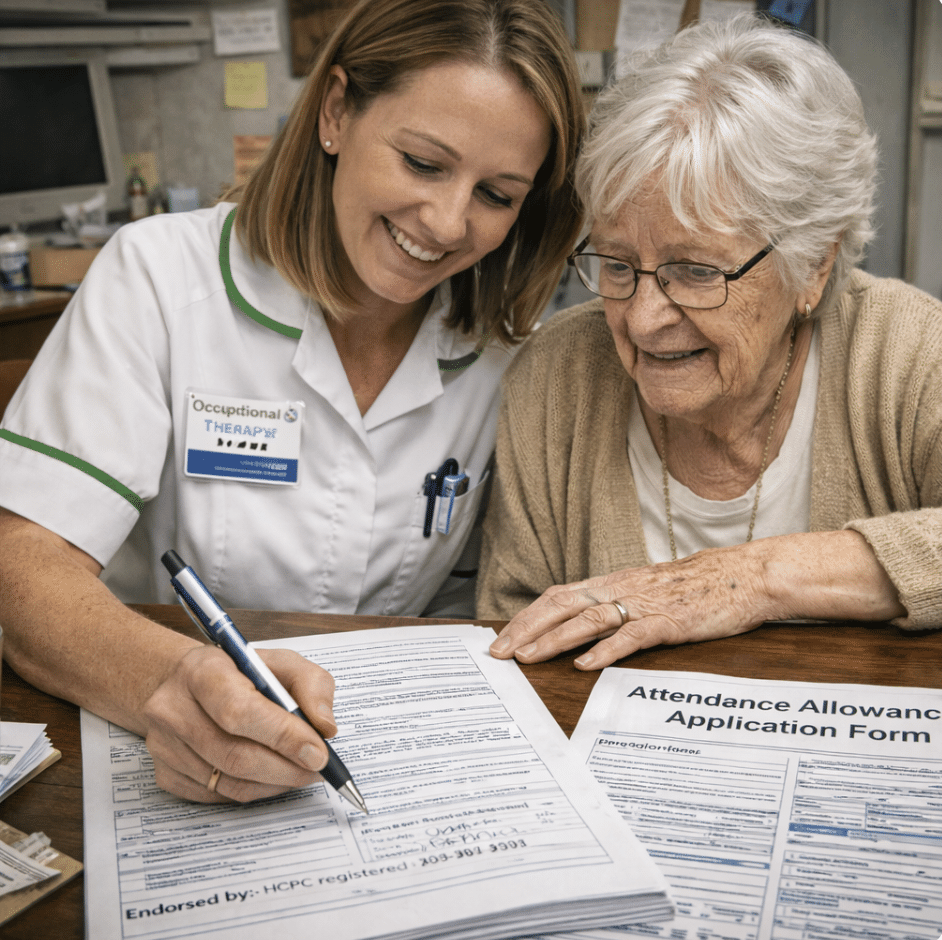
Our applications are supported by HCPC-registered Occupational Therapists, ensuring care needs are presented clearly, honestly and professionally.
How Our Service Works
We support clients by:
- gathering comprehensive health information
- clinically reviewing how conditions affect daily living
- identifying supervision and safety risks
- completing AA or PADP forms accurately
- preparing documentation for your approval
If your application is successful, our £600 fee is usually covered by your backdated award.
All ongoing benefit payments are 100% yours to keep.
Full service details can be found in our
👉 Terms & Conditions
https://attendance-allowance.co.uk/terms-conditions-of-service/
Free, No-Obligation Support
If you’re unsure whether your condition qualifies — or whether you’re describing your needs correctly — our team is here to help.
We will explain:
- whether AA or PADP may apply
- what decision-makers assess
- how clinical evidence supports claims
- and whether professional help would benefit you
There is no pressure and no obligation.
Speak to Attendance Allowance Services Ltd today
👉 https://attendance-allowance.co.uk/
Let us help you understand your entitlement —
safely, clinically and with dignity.